
Park Golf
WHAT IS PARK GOLF?
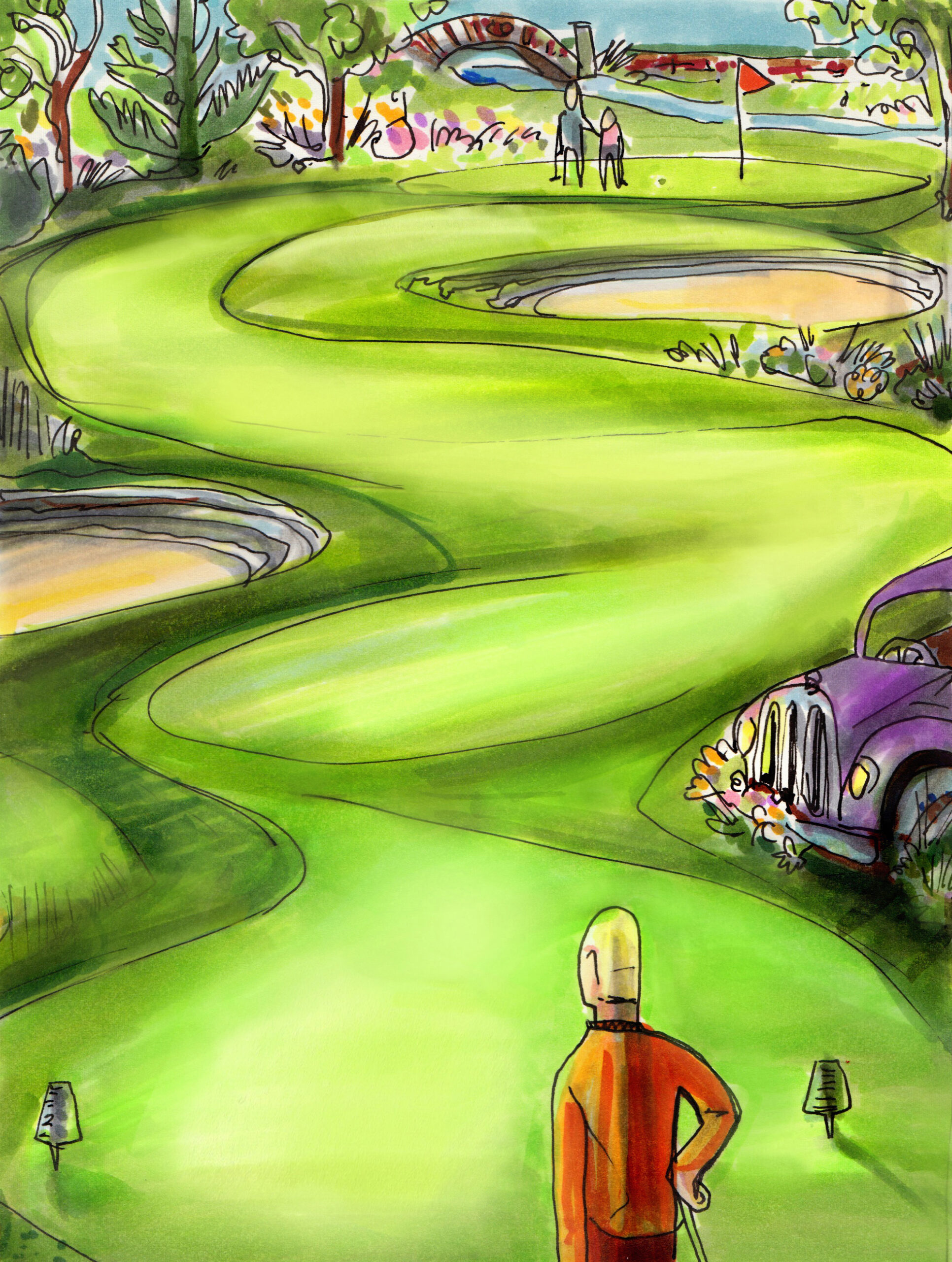
Park Golf is a friendly, accessible version of golf that was invented in Makubetsu, Hokkaido, Japan in 1983 and has since become a beloved sport for people of all ages and abilities. Unlike traditional golf, Park Golf is played in parks on short, easily walkable courses—typically 9 holes with a total length of 500 meters or less—using just one club and one ball designed for the game, making it simple, low-cost, and fun to learn.
The sport blends elements of classic golf with the social and playful aspects of other park games, where the goal is to hit the ball into the hole with the fewest strokes while enjoying the outdoors, camaraderie, and a relaxed pace that’s perfect for families, friends, and multi-generation groups.
Park Golf courses emphasize harmony with the natural setting and respect for other players, and they can fit easily into public parks and open spaces where traditional golf isn’t practical or affordable.

FREQUENTLY ASKED QUESTIONS
Where did Park Golf originate?
Park Golf was invented in 1983 in Makubetsu, Hokkaido, Japan, with the goal of creating an affordable, inclusive outdoor activity that anyone could enjoy. Today, Japan has over 1,000 Park Golf courses and millions of active players, particularly among seniors and families.
The sport has since expanded to Korea, China, and parts of North America.
How is Park Golf different from traditional golf?
| Feature | Park Golf | Traditional Golf |
|---|---|---|
| Clubs | One club only | Full set (up to 14 clubs) |
| Ball | Larger plastic ball | Small dimpled golf ball |
| Hole Size | Larger cup | Standard 4.25″ hole |
| Course Length | 30–100 m per hole | 100–500+ m per hole |
| Skill Barrier | Low | Moderate to high |
| Time to Play | 30 mins–2 hours | 4–5 hours |
| Dress Code | Casual | Often traditional golf attire |
Park Golf is designed to remove barriers such as cost, equipment complexity, and skill intimidation.
Who can play Park Golf?
Park Golf is ideal for:
Seniors and active retirees
Families with children
Youth and school groups
Beginners to golf
People seeking low-impact physical activity
Because swings are shorter and walking distances are moderate, it is especially popular among players who may find traditional golf physically demanding.
How long does it take to play?
9 holes will take 30 minutes to an hour whereas 18 holes will take 1-2 hours to play.
The shorter duration allows for highly daily capacity than traditional golf would allow.
How large is a Park Golf Course?
Typical land requirements:
9-hole course: 0.5–2.5 acres
18-hole course: 1–5 acres
Courses can be integrated into parks, gardens, waterfront areas, or natural landscapes.
What equipment is required?
Players need only:
One Park Golf club
One Park Golf ball
A tee (often attached to each tee box so golfer is not obligated to carry one)
Facilities typically provide rental equipment, making it easy for first-time players to participate.
Is Park Golf difficult to learn?
No. Most first-time players can learn the basic rules in 5–10 minutes.
The simplicity of equipment and rules allows beginners to enjoy the game immediately, while still offering skill progression for experienced players.
What are the health benefits?
Park Golf promotes:
Light cardiovascular exercise
Balance and coordination
Social interaction
Mental relaxation
Outdoor activity
Because it involves walking and moderate movement, it is widely recommended for active aging programs.
How much maintenance does a Park Golf Course require?
Maintenance is significantly lower than traditional golf:
Short fairway grass (but not putting green speeds)
Minimal irrigation requirements
No bunkers required
Smaller mowing area
Lower fertilizer and chemical use
Operating costs are typically a fraction of a traditional golf facility.
Is Park Golf financially viable for municialities?
Yes. Park Golf facilities often succeed because:
Low capital cost compared to golf courses
Broad demographic appeal
High participation rates
Equipment rental revenue
Event and group bookings
Minimal staffing requirements
Many municipalities view Park Golf as a recreation amenity rather than a golf operation.
How does Park Golf compare to Miniature Golf?
| Feature | Park Golf | Mini Golf |
|---|---|---|
| Surface | Natural grass | Artificial surfaces |
| Experience | Outdoor sport | Amusement attraction |
| Skill progression | Yes | Limited |
| Walking | Yes | Minimal |
| Audience | All ages | Primarily families |
Park Golf sits between golf and mini golf — more athletic and natural than mini golf, but easier and more accessible than golf.
Is Park Golf suitable for Canada?
Yes. Park Golf works well in Canadian climates because:
Shorter playing season is acceptable due to low maintenance costs
Appeals to aging populations
Fits within park-based recreation models
Compatible with multi-use green spaces
Several courses have been successfully introduced in Western Canada.
What makes for a successful Park Golf facility?
Key success factors include:
Scenic natural setting
Walkable layout
Simple clubhouse or kiosk
Equipment rental availability
Beginner-friendly design
Integration with parks or gardens
Community programming and leagues
Can Park Golf be combined with other amenities?
Absolutely. Successful Park Golf destinations often include:
Putting courses
Gardens or learning landscapes
Cafés or patios
Youth recreation spaces
Walking trails
Community gathering areas
This creates a multi-generational destination rather than a single-use facility.

Our Mission
Our mission is to grow Park Golf across Canada by designing welcoming, sustainable, and beautifully crafted courses that bring people together through the joy of golf. We combine thoughtful design, expert guidance, and quality equipment to make Park Golf accessible, fun, and enduring for communities of all sizes.